Case study / GALA Music

The brief was UI-only. The problem was the whole experience.
UX
UI
Design System
Web3 · Music Streaming
The brief was UI-only.
The problem was the whole experience.

Web3 music platform with a Web2 audience problem. 13 page types. Full Discovery redesign.

GALA Music is a Web3 music streaming platform. Users could listen to tracks, participate in live experiences with artists, collect music as NFTs, and own on-chain assets. Part of the Gala Games ecosystem on GalaChain.
The content went well beyond tracks: Experiences were live interactive sessions with artists. Mystery Boxes were limited edition drops. Live Streams let fans participate in real-time. The platform had real depth and a genuine product advantage over Spotify: things mainstream platforms literally cannot offer.
The problem was Discovery. It organized all of this around crypto mechanics, not music. The audience that needed to grow the platform never saw what made it worth using.
About the client
Industry
Web3 / Music
Platform
GALA Music (Gala Games ecosystem)
My role
UX Lead, UI Designer
Team
Enrico Rolando (UX Lead), Charlie Simpson (Art Director)
Results
13
page types redesigned
15
user flows designed
60+
components updated
2 mo
full Discovery redesign

The platform had something Spotify cannot offer. Discovery made it invisible.

The old Discover page had two tabs: "All Tracks" and "Before they're gone." The second tab is a scarcity mechanic, not a music discovery path. The cards showed album art and track name, but the information that dominated visually was the price in $MUSIC tokens and a scarcity counter: "60/100." "30/100." "21/100."
The platform had real music. You could press play. You could join live experiences with artists. Things mainstream platforms literally cannot offer. That product advantage was genuine.
But Discovery didn't show any of that. It showed a grid of limited-edition assets with token prices. A Web2 listener landing on this page wouldn't know they could just hit play. They would see prices, token logos, scarcity counters, and leave before finding what made the platform worth using.
The problem was structural: Discovery was organized around crypto mechanics, not around music. No genre browsing that made sense to a mainstream listener. No editorial sections. No "new releases." No moment where the platform said: here's what kind of music you might like.
The growth target was Web2 mainstream listeners. Discovery repelled them before they could find what made the platform unique.

Methodology

01
Scope Expansion Before Any Design
The brief was UI. The problem was UX. Those are different things and designing the wrong one wastes both budgets. On day one it was clear: the visual surface was a symptom. The root cause was an information architecture that prioritized crypto mechanics over the music experience. Aligned with the team to expand scope before touching a single component.
02
Competitor Analysis: Web2 Discovery Patterns
Mapped how the best music platforms handle discovery. Goal: extract patterns that feel natural to a mainstream listener, then apply them to GALA Music's content types.
Spotify: browse patterns, artist page structure, editorial curation, playlist UX
YouTube Music: content type differentiation, algorithmic surface
Apple Music: editorial curation, visual hierarchy, curated sections
Yandex Music: one of the strongest UX benchmarks in music streaming
03
Applying Web2 Patterns to Web3 Content
The challenge: GALA Music has content types that don't exist on Spotify. Mystery boxes, experiences, live streams. These can't map 1:1 to a Spotify UI. The approach: separate content type from discovery pattern. A mystery box can have editorial context. An experience can have a genre. A live stream can have a "what to expect" moment. Every page type was structured around two questions: what does a first-time visitor need to understand this content, and what does a returning visitor need to find more of it?
04
13 Page Types: Full UX and UI
Complete redesign across the full Discovery surface. Every page type restructured to lead with music context before surfacing price or scarcity. Artist pages redesigned to show catalogue, story, and discoverability. Discover index redesigned with editorial sections and content type differentiation. Track, Playlist, Experience, Mystery Box, Live Stream: all 13 page types, UX and UI.
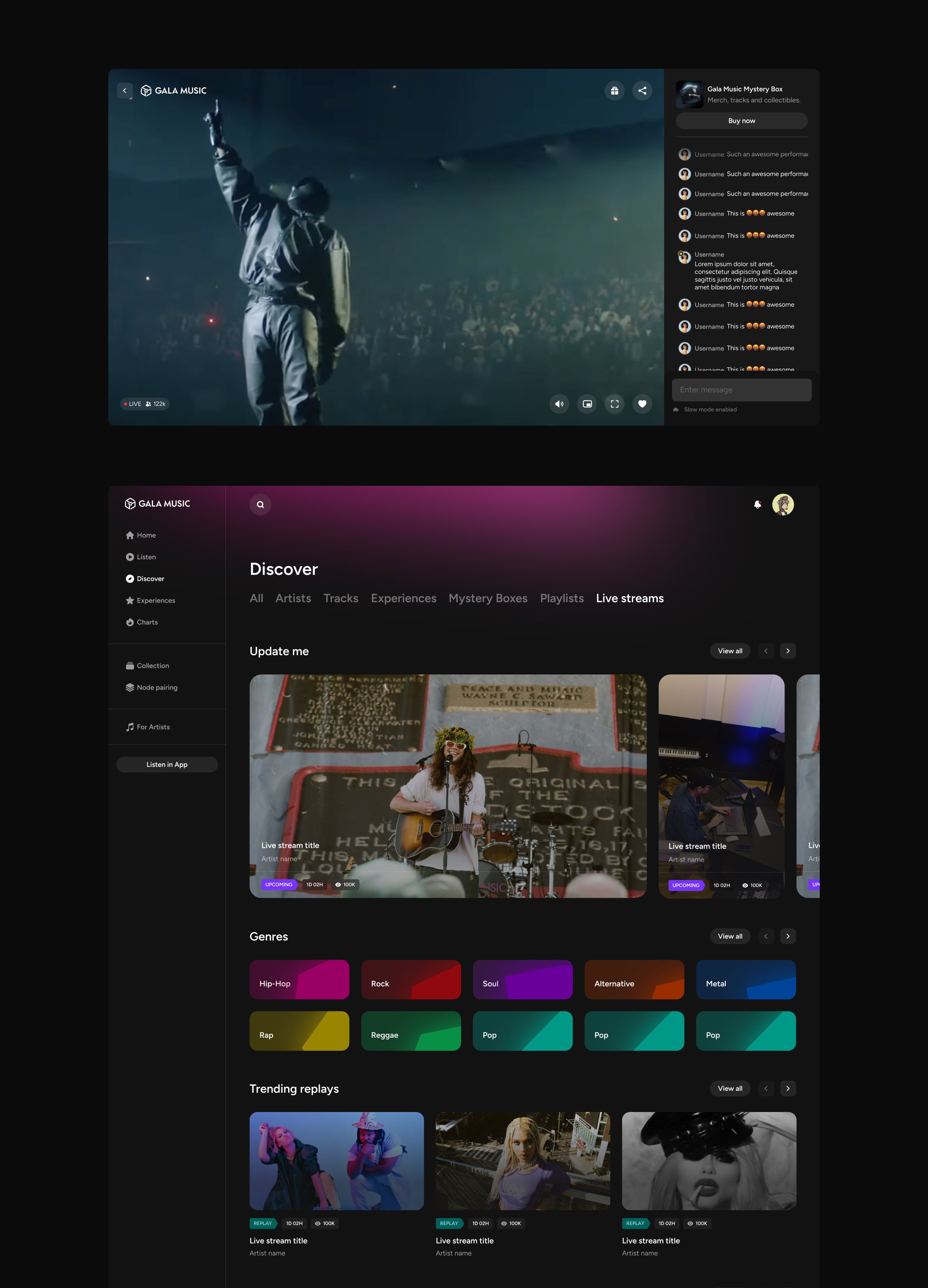
Discover (index)
Tracks (index + detail)
Artists (index + detail)
Experiences (index + detail)
Mystery Boxes (index + detail)
Playlists (index + detail)
Live Streams (index + detail)
05
Design System Optimization
The existing design system had components that didn't scale across 13 content types. Audited and extended it as the redesign progressed: tokens updated, components refined, section layout patterns added. Every new page type was built from the updated system. By the end, the design system covered the full Discovery surface with no orphaned components.
06
Process Fix (Not in Brief)
Midway through the project: feature prioritization was being driven by developers without design-led sequencing. Work was starting before design decisions were resolved. Documented a structured design-to-dev workflow, shared with the UX lead, escalated to the product strategist and dev team. Not in the brief. The prioritization process eventually stabilized.

Music first, crypto second. 13 page types. 7 content areas.

Full Discovery redesign across 7 content types: main Discover feed, Artists, Tracks, Experiences, Mystery Boxes, Playlists, and Live Streams. Each with its own index page, detail page, and editorial sections — all applying Web2 music discovery patterns to a Web3 content model.

Discover: All
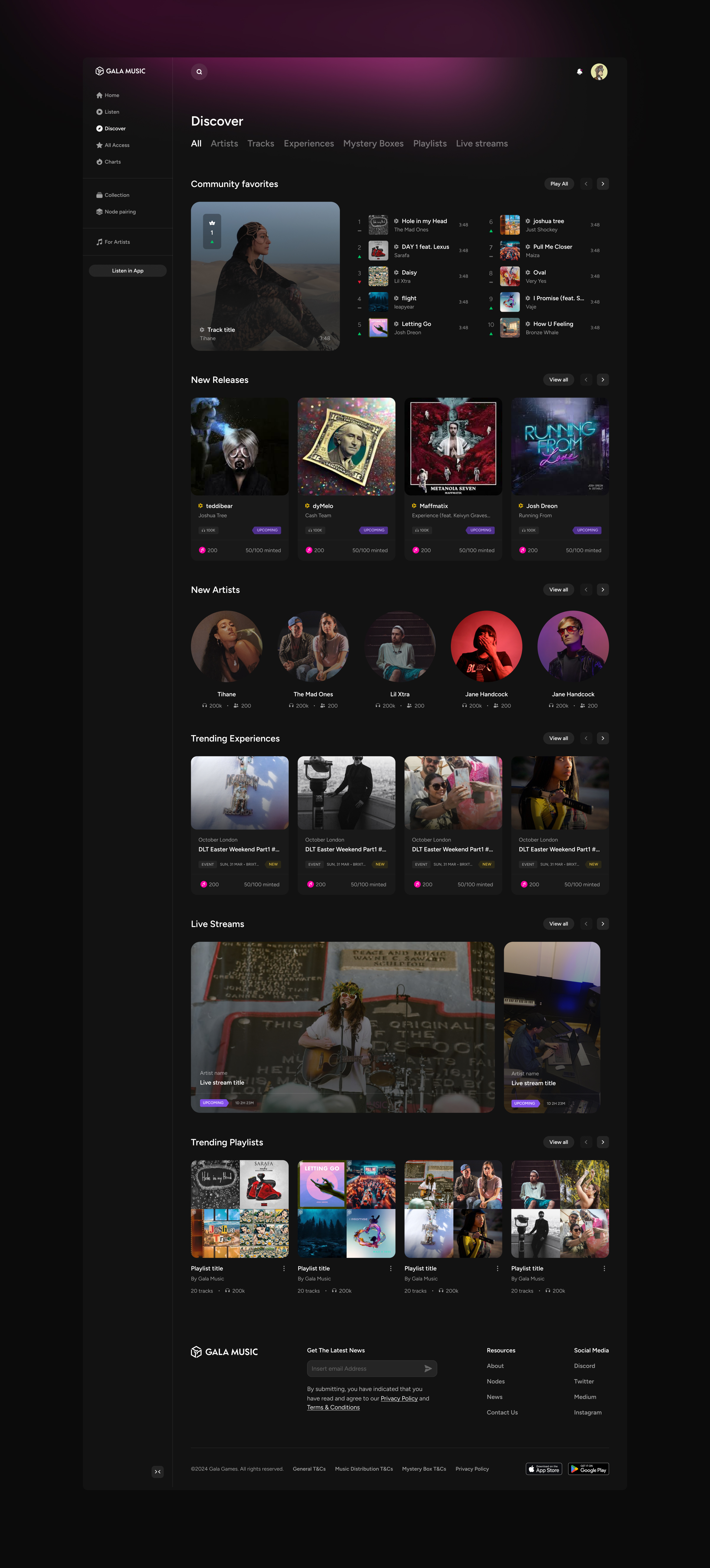
The main Discovery page redesigned as a music-first feed. Community favorites, New Releases, New Artists, Trending Experiences, Live Streams, and Trending Playlists in one unified scroll. Each section with its own editorial logic. Not a flat grid of assets with token prices.
Discover: All

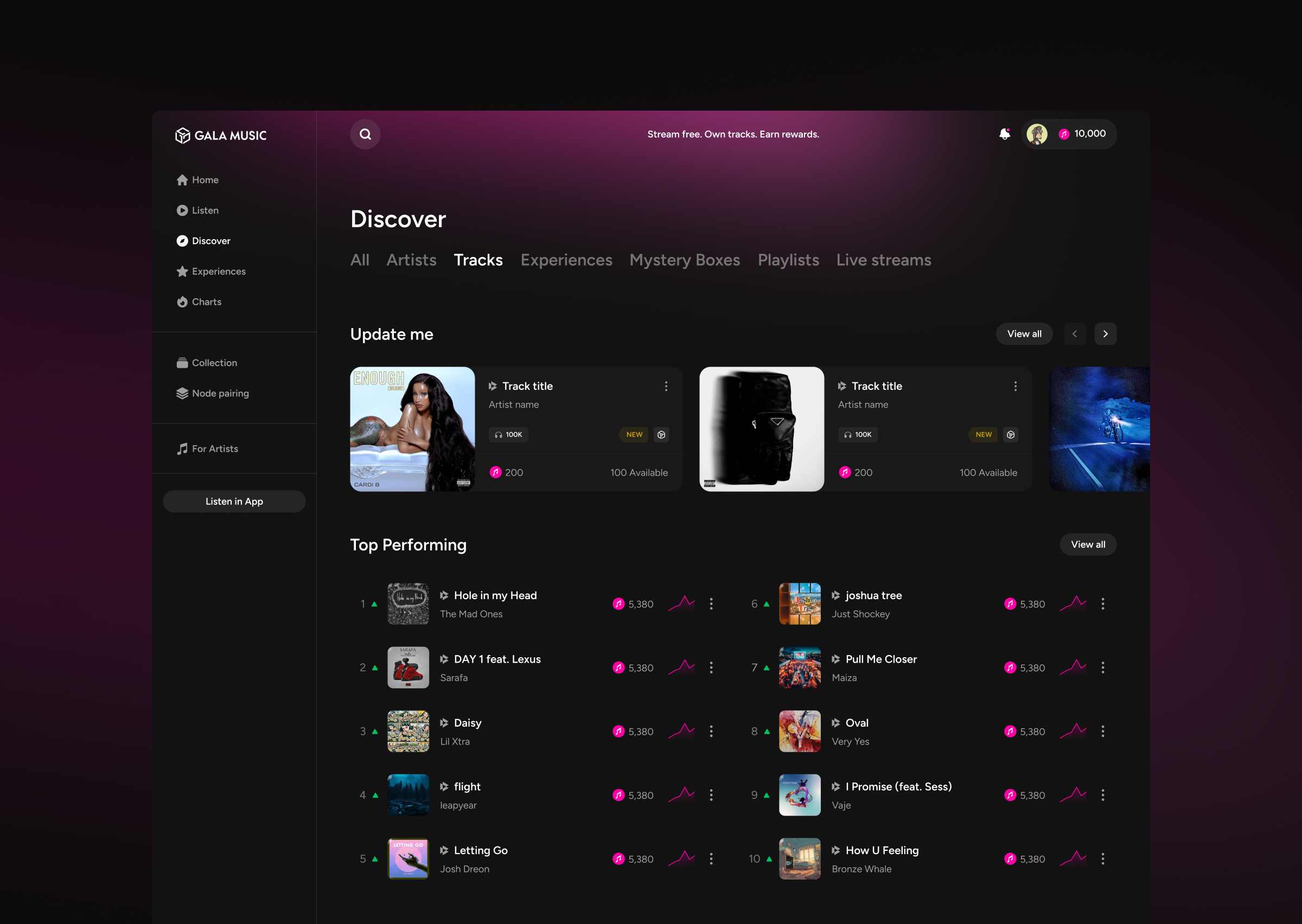
Tracks: Discovery

"Update me" section for new drops from followed artists. Top Performing chart with ranking, price, and trend indicators. Genre browsing. Two distinct discovery paths: personalized and editorial. The same patterns any mainstream listener already knows from Spotify.
Tracks: Discovery

Track: Detail

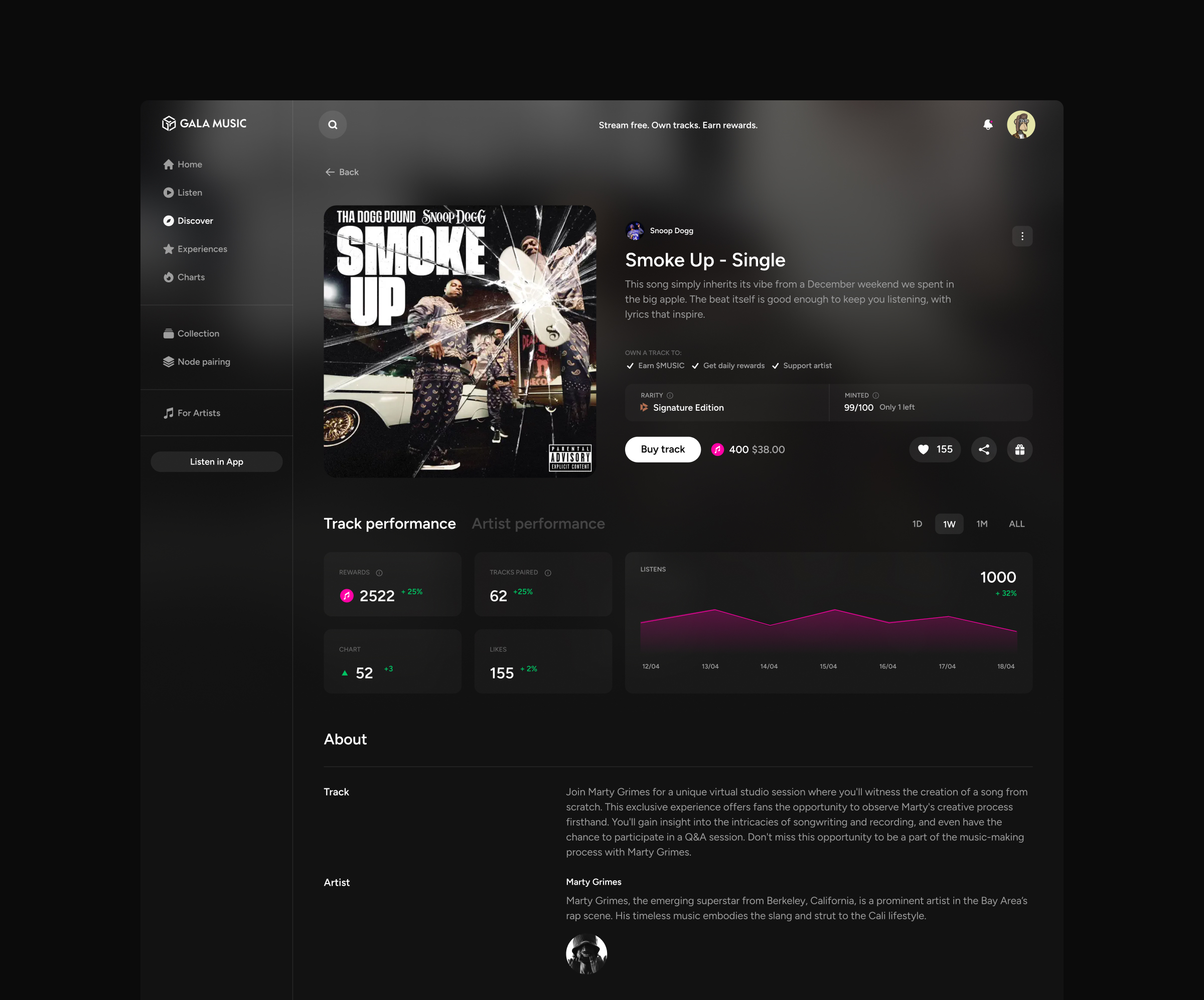
Track detail with album art, artist info, rarity and minted count, performance data (rewards, tracks paired, chart position, listens over time). The earn-while-you-listen mechanics explained after the music context is established, not before it.
Track: Detail

Artists: Discovery

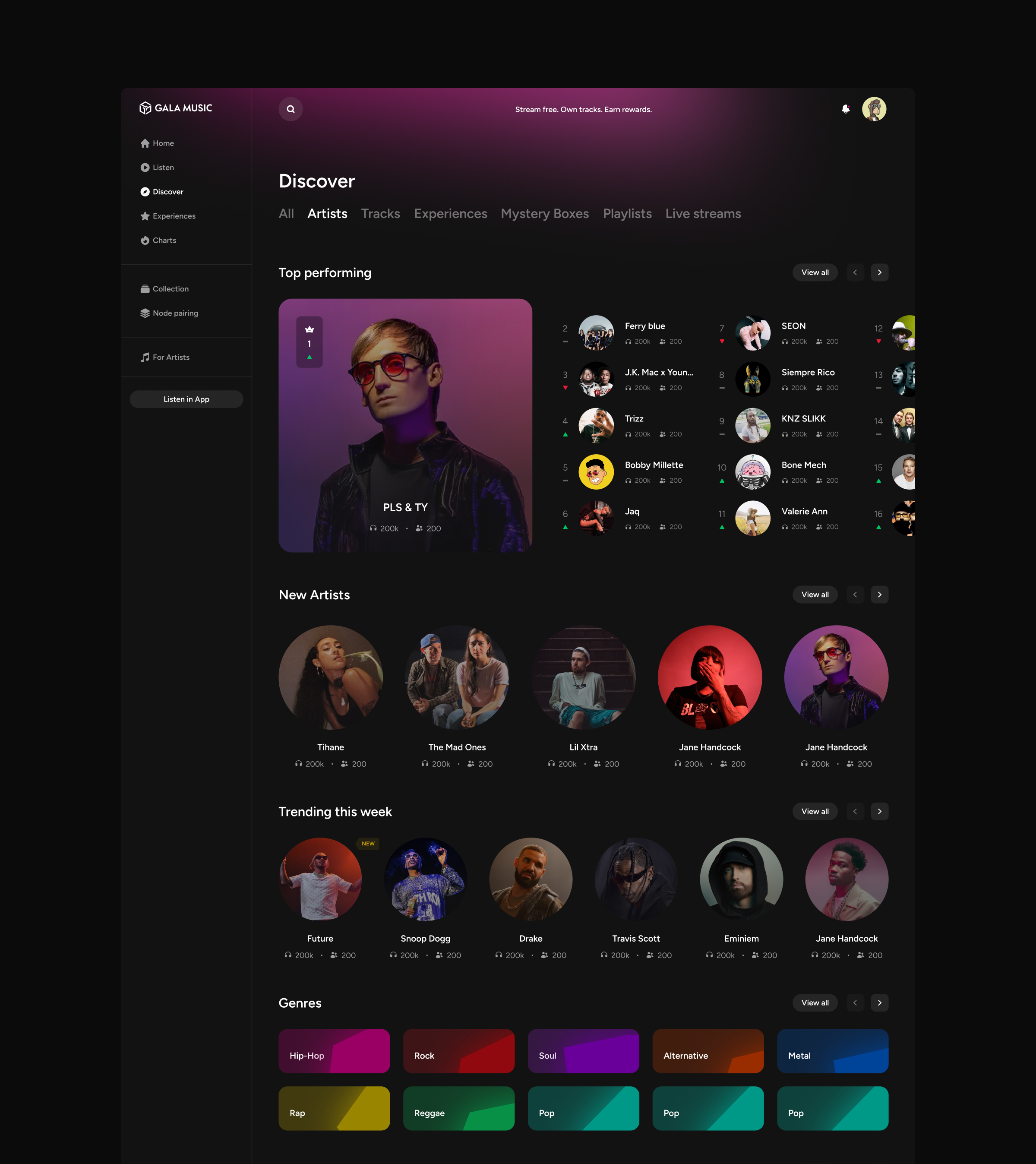
Artists catalog redesigned with a Top Performing leaderboard, New Artists carousel with circular photo portraits, Trending This Week section, genre-based browsing, and genre-sorted rankings. Artist identity and music context visible at the browse level, not just a list of profiles with token counts.
Artists: Discovery

Artist: Detail Page
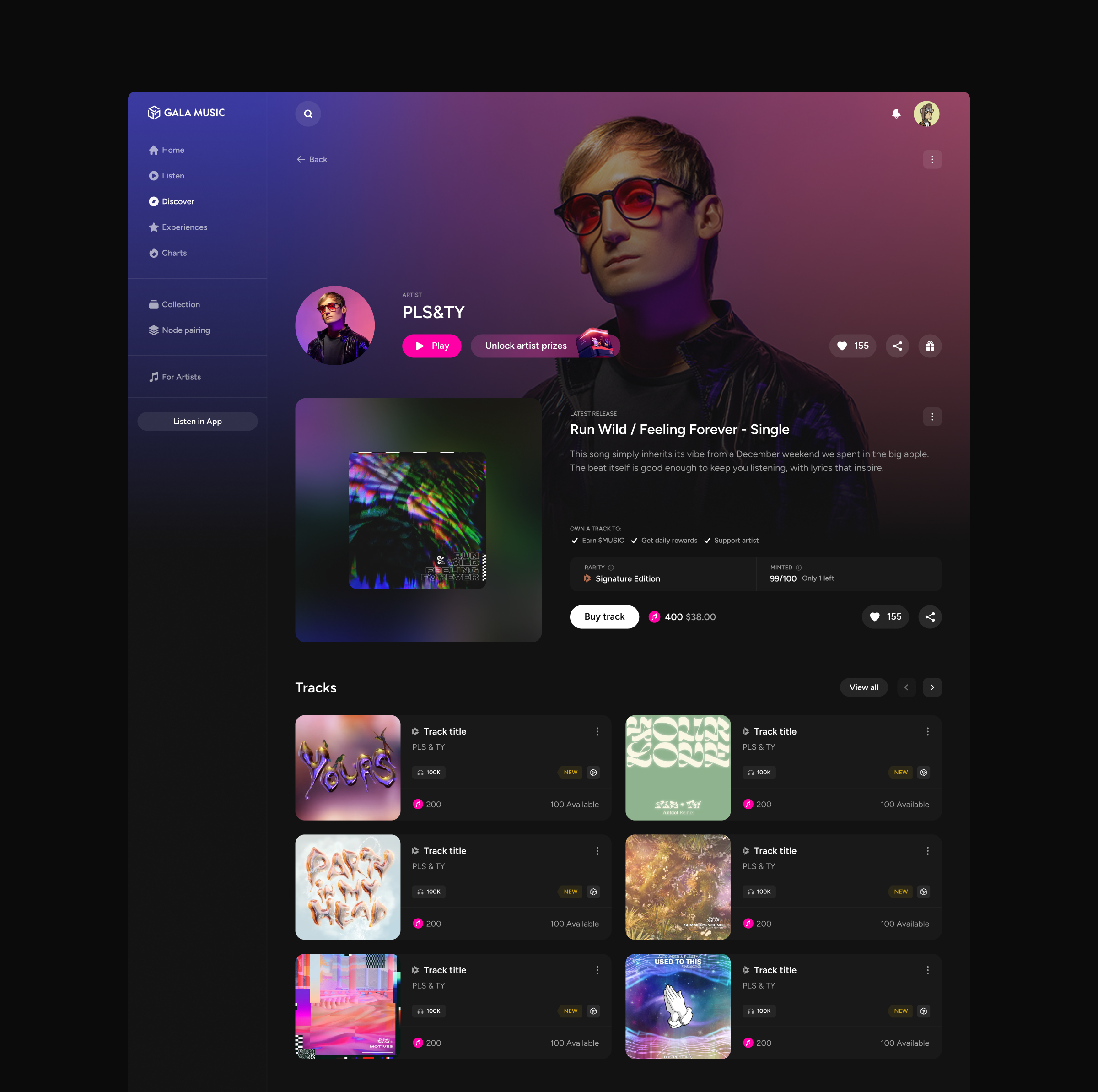
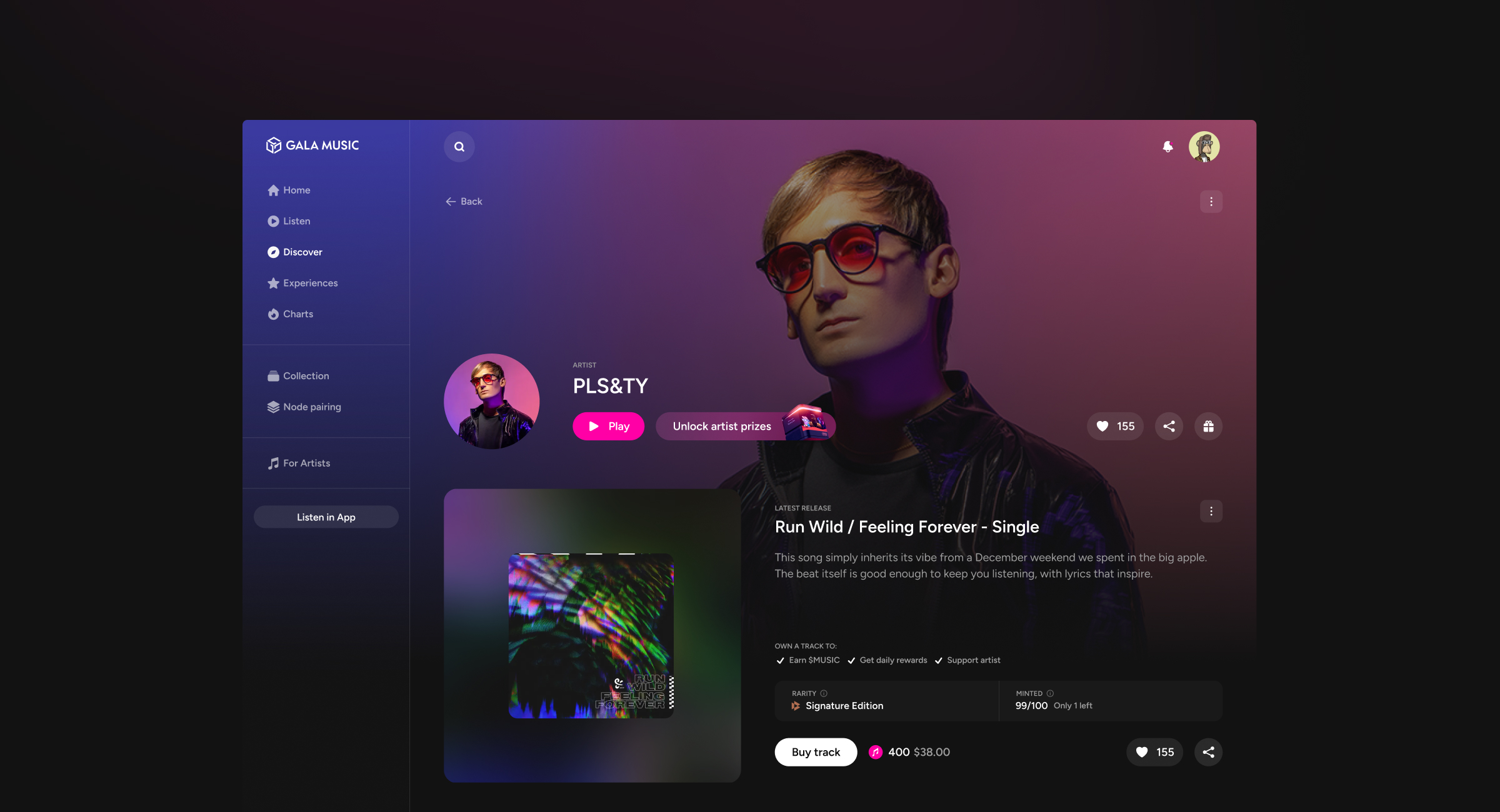
Full artist page with full-bleed photography in the header, play button, latest release with direct buy track option, tracks grid, performance stats, experiences from that artist, mystery box promotion, merch, live streams, and similar artists. Everything a fan or new listener needs on one page.
Artist: Detail Page

Experiences: Discovery and Detail
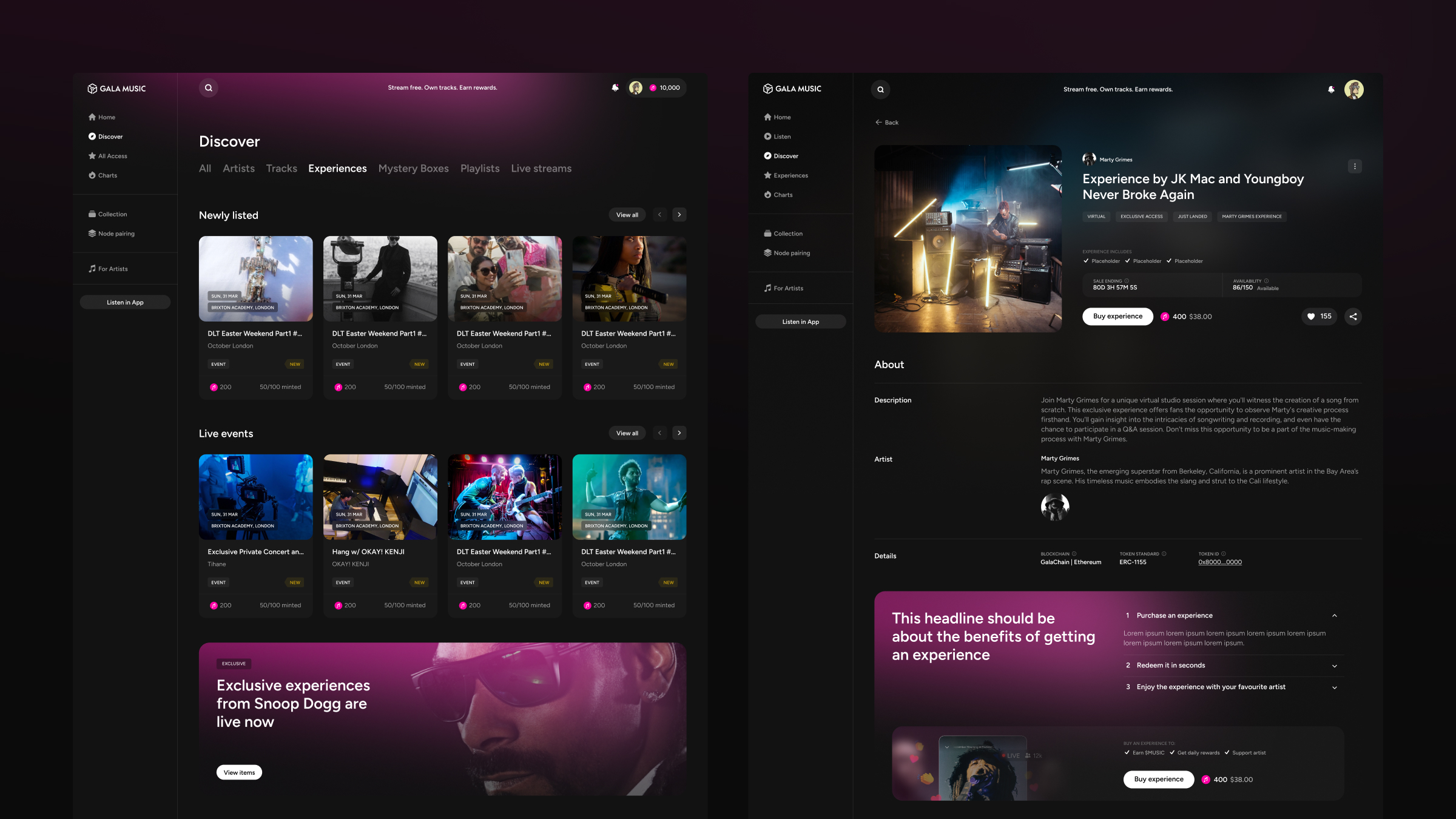
Experiences index with Newly Listed, Live Events, exclusive artist promotions, Virtual Experiences, and Trending sections. Experience detail with full context: what is included, artist background, sale timing, availability, and a step-by-step explainer for first-time buyers.
Experiences: Discovery and Detail

Playlists
Playlist detail with collage cover art, track metadata, total listens, duration, and direct price and availability per track in the tracklist. Community-curated, artist-curated, and Gala Music editorial playlists, each with its own browse section.
Playlists

13 page types. One principle: music first.

The brief was UI. The output was a full Discovery redesign: 13 page types, UX and UI, design system extended across all of them. The team was surprised by the speed of delivery. Working process and communication rhythm with Enrico (UX lead) and Charlie (art director) enabled unusually fast execution without sacrificing quality. The scope also grew beyond the original brief: a structured design-to-dev workflow was proposed and eventually adopted.

Key achievements
01
13 page types redesigned across the full Discovery experience. Full UX and UI from Discover index to every content type detail page.
05
Feature delivery workflow proposed and eventually adopted by the team. Not in the brief. Done anyway.
13
page types redesigned
15
user flows
60+
components updated
2 mo
full Discovery redesign
"
Dmitry has been an invaluable member of the Gala design team. He has demonstrated exceptional talent, creativity, and dedication to the craft. Dmitry is a truly gifted designer that stands out for his remarkable adaptability, communication efficiency and innovative thinking, consistently delivering designs that are not only visually striking but also effectively embody the project objectives.
Enrico Rolando
Lead UX Designer, GALA Music

Strategic note

GALA Music had something Spotify cannot offer: live experiences with artists, on-chain music ownership, fan economics that cut out the intermediary. That is a real product advantage. The technology worked. The content was real.
Discovery buried it.
The problem I see repeatedly in Web3: the product is built by and for people who already understand the ecosystem. The value proposition that matters to a new user is invisible, because the entry experience is organized around mechanics they do not yet understand.
You cannot convert a Web2 listener by making them learn crypto first. They will leave before they learn anything. They have Spotify. It works. Switching costs are real.
The Discovery redesign was not about making GALA Music look more like Spotify. It was about surfacing the music using patterns that mainstream listeners already know. Once they are in the music, the ownership mechanics can surface naturally. A listener who just joined a live experience with an artist will understand NFT ticketing in about 30 seconds. But you have to get them to the experience first.
Lead with what you have that no one else has. Not with how it is structured on-chain.
Dmitry Chernov
Dmitry Chernov
Web & Product Architect / AI, SaaS & Web3
Let's talk about your website
Free 30-minute call. No commitment. I'll share 2–3 observations about your site before we discuss anything else.
More case studies

Your website has problems you can't see. I'll find them for you.

Free 30-minute call. No commitment. I'll share 2–3 observations about your site before we discuss anything else.

Dmitry Chernov
Web & Product Architect AI, SaaS & Web3
© 2026 Dmitry Chernov. All rights reserved.
Privacy policy Terms and conditions